Let SiteLynx help your organization thrive.
See how SiteLynx can drive more business for your organization!
Partner provided comprehensive environmental oversight for an international airline (“the Client”) during the construction of a new multi-billion-dollar terminal at a major U.S. airport. We played a crucial role in coordinating among the Client, the general contractor, the airport authority, and numerous subcontractors and vendors to ensure environmental requirements were clearly understood and efficiently implemented across all phases of the project. By proactively aligning environmental compliance with construction activities, we helped minimize disruptions, avoid costly delays, and streamline decision-making among project stakeholders.
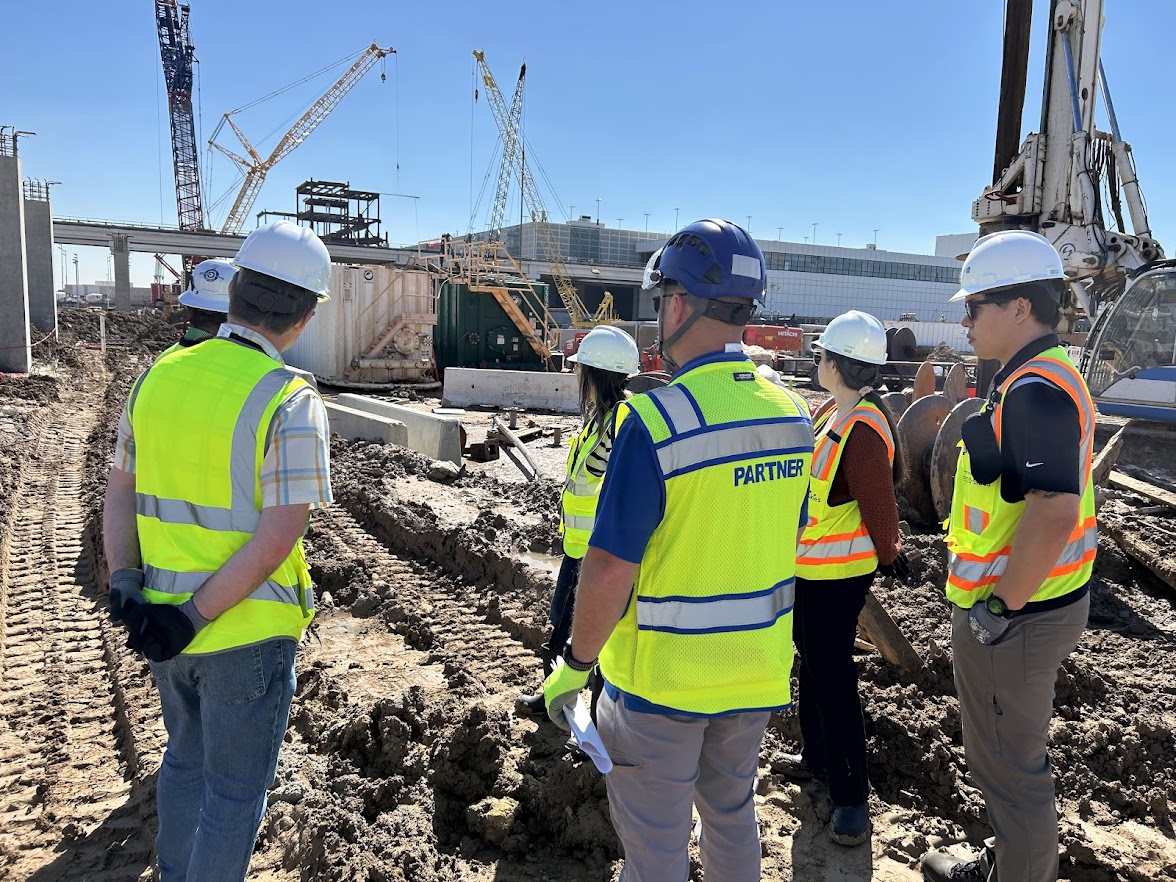
Partner served on-site as the environmental representative for the Client during all earthworks activities and throughout the construction process, providing a blend of technical expertise and hands-on management in a fast-paced construction environment. This on-the-ground presence allowed environmental issues to be identified and resolved in real time, preventing work stoppages, reducing the need for costly rework, and ensuring that construction crews could maintain momentum. By addressing potential compliance concerns early and coordinating directly with contractors and regulators, we helped the Client avoid schedule impacts and unexpected expenses.
With an emphasis on safety, efficiency, and regulatory compliance — particularly within the highly demanding airline industry — we ensured that all environmental aspects of the project were effectively managed. Our team developed practical solutions that balanced environmental protection with construction efficiency, enabling contractors to meet regulatory obligations without slowing progress. This proactive approach reduced the risk of fines, permitting complications, and schedule overruns, ultimately saving the client both time and money.
By balancing environmental protection with the strict timeline and budget constraints of the construction process, we helped the airline make informed decisions about its assets and redevelopment plans while keeping the project on track and within budget. Our ability to integrate environmental oversight directly into the construction workflow improved project efficiency, minimized delays, and provided the client with confidence that regulatory obligations were met without compromising cost control or schedule performance.
Challenges Encountered and Partners’ On‑the‑Ground Solutions
During the early stages of construction, work on the new terminal was halted after the general contractor identified unexpected Health, Safety, and Environmental (HSE) conditions in both soil and groundwater. This discovery created immediate schedule risk for the Client as well as for the Houston Airport System, the general contractor, and numerous subcontractors who were already mobilized on-site. With limited subsurface data available and construction activities already underway, the project required rapid environmental due diligence and a coordinated plan to safely resume work without compromising compliance or construction momentum.
Serving as the Client’s environmental representative on-site, Partner worked directly with the contractor, the airport authority, and multiple stakeholder teams to realign environmental expectations and stabilize project operations. We participated in daily restart meetings, early-phase coordination sessions, and weekly OAC (Owner–Architect–Contractor) meetings to help unify communication and ensure consistent interpretation of environmental requirements. Through accelerated field investigations, including soil and groundwater screening, we developed a high-density subsurface dataset that provided regulatory certainty and allowed the team to map contaminant distributions in real time. These “heat maps” became critical tools for identifying excavation limits and determining how construction could progress safely and efficiently.
To support a rapid return to work, Partner led development of a comprehensive Media Management Plan (MMP) and Health and Safety Plan (HASP), each tailored to address the unique conditions discovered during excavation. Our team coordinated waste characterization, mobilized skilled remedial operators, and secured adequate transportation and disposal capacity so impacted soil could be promptly removed, recycled, or properly disposed of. Once remediation was completed in each area, we formally released work zones back to the general contractor, enabling construction to resume without unnecessary delay.
Groundwater conditions introduced additional challenges. Excavation below the water table was required for stormwater drains and duct banks, but a traditional construction stormwater permit was not advisable for managing potentially impacted dewatering fluids. Partner quickly designed and implemented an adjusted remedy that replaced short-term frac tank storage and deep well disposal — which proved unsustainable — with a dedicated treatment system consisting of dual 5,000‑lb carbon vessels. This system allowed the project to maintain compliance while continuing subsurface work and keeping the construction schedule intact.
Across all activities, Partner’s role centered on rapid problem-solving, consistent field presence, and seamless coordination with regulatory agencies and construction teams. By integrating environmental oversight directly into daily construction operations, we helped the Client avoid prolonged shutdowns, mitigate cost exposure related to remediation and permitting, and maintain the overall pace of the terminal redevelopment project.